
TRANSPORTATION
Madison is changing how people move through the city.
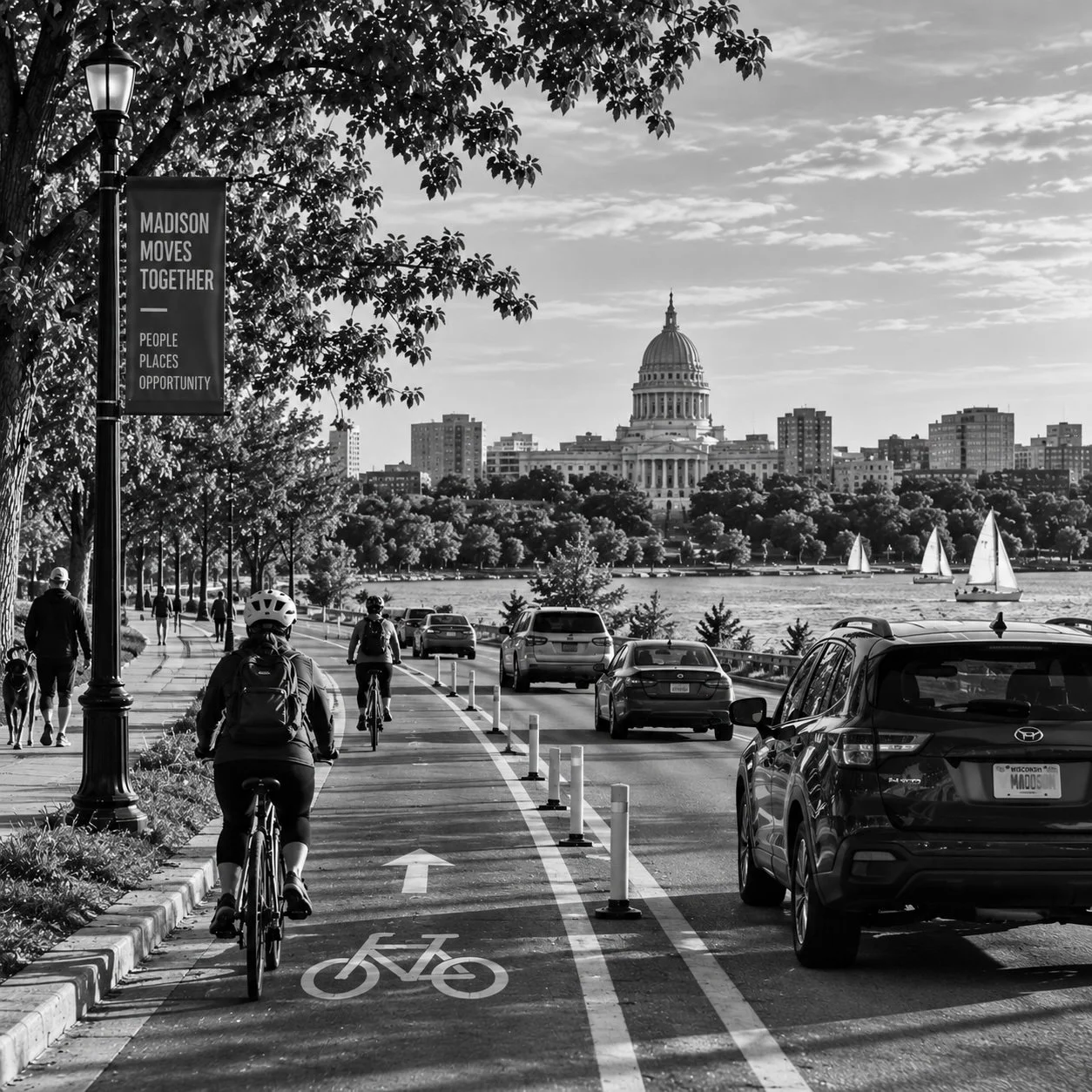
BRT, bike infrastructure, shared-use paths, redesigned streets and pedestrian improvements are all intended to make transportation safer and more efficient as Madison grows.
But building transportation infrastructure is only part of the equation.
We also need to ask what changed because of it.
Are people getting where they need to go safely, reliably and efficiently — whether they drive, ride transit, bike or walk?
KNOW WHAT SUCCESS MEANS
It’s easy to measure how many people ride a bus, how many bicycles use a path or how many cars travel down a street.
Those numbers matter. But they don't always tell us whether the transportation system is working better for people.
BRT ridership, for example, can tell us how many people are using transit. But if part of the goal is reducing automobile dependence, another important question is:
Are people who previously drove actually choosing transit instead?
The same thinking applies across the system.
Are streets safer? Are travel times improving? Are shared paths working for cyclists and pedestrians? Is traffic being reduced — or simply moving somewhere else?
Success has to be defined by the goal, not just the activity.

TEST. MEASURE. ADJUST.
Transportation is a system. Changing one part can affect another.
Improving transit can change traffic patterns. Adding bicycle infrastructure can affect vehicle lanes. E-bikes can make trips easier while creating new challenges on shared paths. Growth can put additional pressure on all of it.
That doesn't mean we stop improving transportation.
It means we measure what actually happens.
What worked? What didn't? Who benefited? Who was affected differently than expected?
Then we adjust.
The goal shouldn't be to make Madison a city for cars, buses, bicycles or pedestrians.
The goal should be a transportation system that works for the people who use all of them.