
HOUSING + HOMELESSNESS
A HOME THAT WORKS. A PATH BACK WHEN IT DOESN'T.
Housing affects every stage of life.
People need the ability to move—from a first apartment, to ownership, to a family home, to something smaller as life changes.
When those choices disappear, the whole housing system gets tighter.
And when someone loses housing altogether, homelessness should not become a permanent condition.
Create more ways to own. Remove the barriers keeping people stuck. And when someone becomes homeless, create a clear path back home.
HOUSING
THE RIGHT HOUSING.
Housing should move with people through life.
Your first apartment shouldn't become your only realistic option because you can't find a home to buy.
A family shouldn't be stuck because there's nowhere appropriate to move next.
And an older resident who wants a smaller home shouldn't have to leave Madison just to find one.
When one part of the housing system gets stuck, it puts pressure on everything behind it.
Madison needs more housing. But counting units isn't enough.
What are we missing? Who needs it? And why aren't we building it?
THE PLAN
Create more ways to own.
Homeownership shouldn't disappear as a realistic next step. Identify why Madison isn't producing more starter homes, condos and other attainable ownership options—and what barriers the City can actually remove.Make it easier to afford the home you already have.
Housing affordability isn't only about finding a home. It's about being able to stay in one. Renters are feeling the pressure of high rents, while homeowners are feeling the pressure of property taxes and other rising costs. Housing decisions and City spending decisions should be made with the total cost to residents in mind—not treated as separate problems.Get the housing ladder moving again.
When young professionals who want to buy can buy, families can find the space they need, and older residents can downsize without leaving their community, existing housing becomes available for the people coming behind them.Use what we already have.
Before assuming another new development is the answer, understand the housing that already exists, where vacancies exist, what can be preserved or converted, and whether existing properties can meet needs we're currently trying to solve through new construction.Be transparent about growth.
Madison is growing, and that growth requires housing. Residents should be able to see what growth we're planning for, what kinds of housing it requires, what public costs come with it, and whether our housing strategy is responding to residents' needs—not simply adding units to hit a number.
THE OUTCOME
More housing choices. More paths to ownership. More ability to move as life changes—and less pressure throughout the housing system.
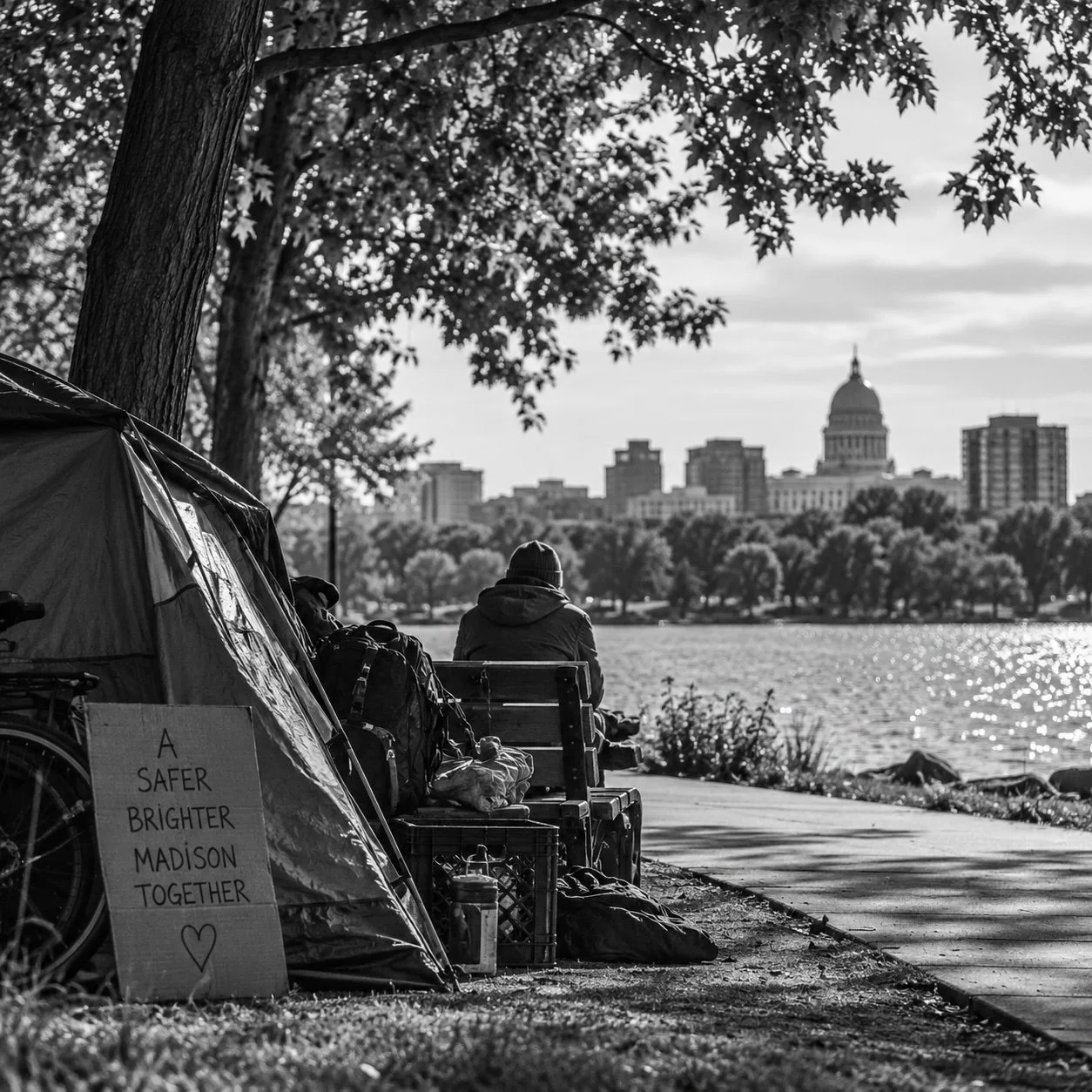
HOMELESSNESS
A PATH OUT OF HOMELESSNESS.
Homelessness should not be something Madison learns to live with.
And we need to stop treating everyone experiencing homelessness as though they have the same problem.
Some people need mental-health or addiction treatment.
Some need supportive housing.
Some are working and simply cannot find housing they can afford.
Some have an eviction, rental debt or another barrier keeping them from getting approved.
Some need something as basic as a small room they can afford.
Different problems require different solutions.
The goal is simple:
Find out what's keeping someone homeless. Remove the barrier. Get them housed. Help them stay housed.
THE PLAN
Create one accountable system.
When multiple agencies and organizations touch homelessness, responsibility can become fragmented. Someone has to be responsible for seeing the whole system, finding where people are getting stuck and making sure the pieces work together.Bring back the housing we're missing.
Madison has lost most of its Single Room Occupancy housing—one of the simplest forms of housing for a single person with very little income. Determine where SROs, rooming houses, micro-units or other small, low-cost housing can create real exits from homelessness.Match the solution to the person.
Don't assume everyone experiencing homelessness needs the same intervention. Identify the actual barrier and respond to that barrier.Create a clear path out.
People shouldn't spend months or years moving between shelters, programs and organizations without getting closer to permanent housing.Use the housing navigators and case managers we already have to create one person, one plan and one clear point of accountability—someone who knows where that person is trying to go, what's standing in the way, what happens next and whether they actually reach permanent housing.
Bring landlords into the solution.
Permanent housing requires actual places to live. Work directly with landlords to understand what keeps them from renting to people coming out of homelessness, remove barriers where we can, and build relationships that open more doors to housing.A voucher, a program or a housing plan only works if someone can actually get the keys.
Measure exits—not just services.
Know how many people become homeless, how long they remain homeless, how many reach permanent housing and how many return.
THE OUTCOME
Fewer people becoming homeless.
Less time spent homeless.
More ways out of homelessness.
More people permanently housed—and staying housed.