
FIRE & EMS
A good system can still be under pressure.
Madison Fire & EMS is doing a lot right.
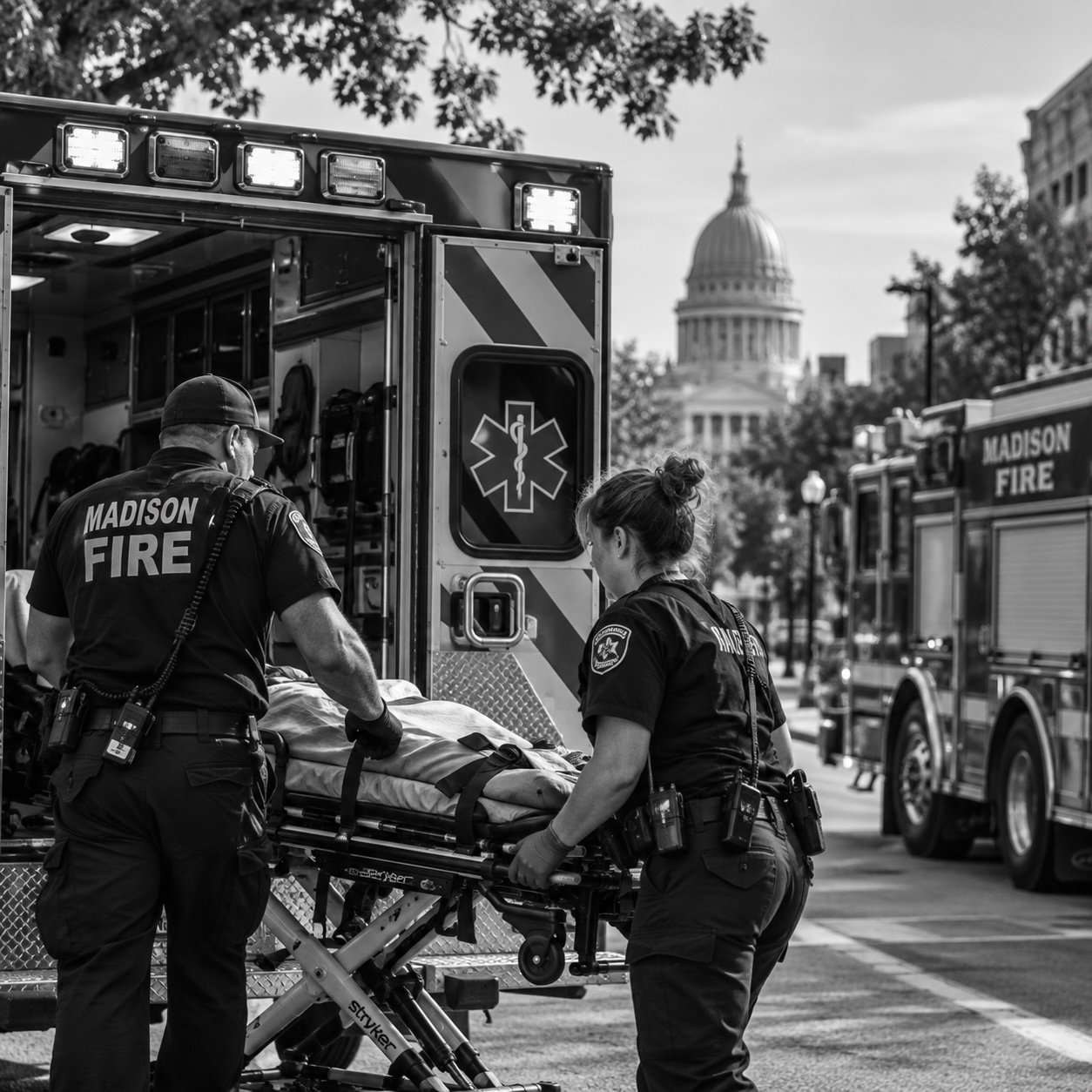
But emergency medical demand is growing faster than the city itself. Calls have roughly doubled since 2005, and Madison has added a tenth ambulance to keep up.
The question isn't simply:
When will we need ambulance #11?
It's also:
Why is demand growing—and how much of it can we prevent?
Every preventable call addressed upstream keeps emergency resources available for the emergency that can't be prevented.
KNOW WHAT SUCCESS MEANS
The goal isn't more ambulances. The goal is enough emergency capacity when people need it.
Madison Fire has already shown what measuring outcomes can look like.
Its Community Paramedicine program focused on people repeatedly using 911, addressed underlying needs, and reported a 54% reduction in 911 use among participants studied.
That's the kind of result we should learn from.
Success means knowing:
Where demand is coming from.
What demand can be prevented.
Whether prevention efforts are working.
Whether staffing, stations and ambulances are keeping pace with growth.
Protect what works. Understand what's driving the pressure.

TEST. MEASURE. ADJUST
Plan for the city we're becoming.
Madison shouldn't wait until Fire & EMS is overwhelmed before adding capacity.
Use population growth, call volume, response times, repeat utilization and geographic demand to anticipate what we'll need next.
At the same time, strengthen approaches that demonstrably reduce avoidable emergency calls.
Measure the pressure. Reduce what can be prevented. Build capacity for what can't.